


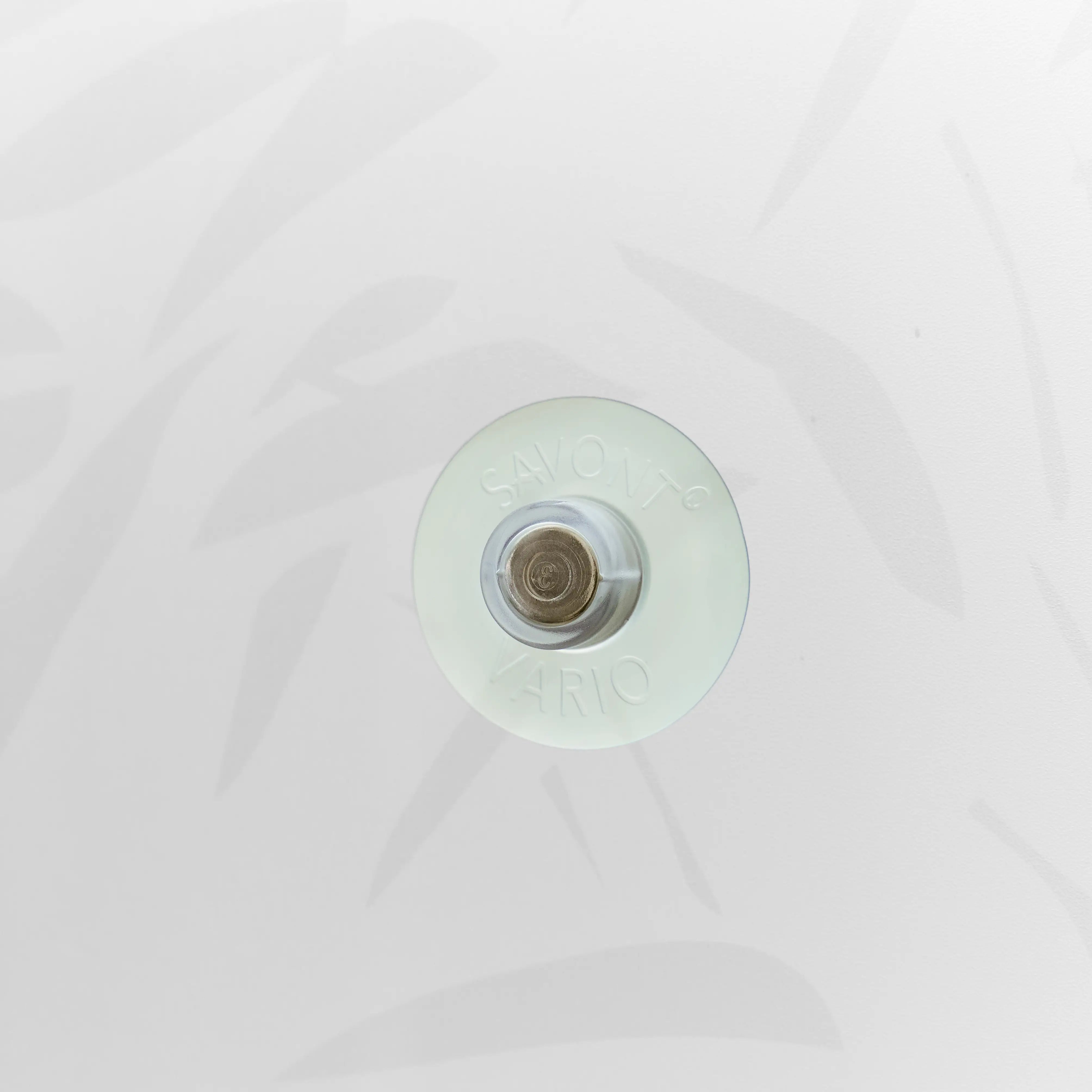
Suction cup won’t stick? Here’s what’s really happening.
Suction cups seem simple, but they only hold reliably when several small details work together: the surface, the material, the shape of the suction cup, and even the humidity during installation.
This guide shows you how to bring a tired suction cup back into shape — and why SAVONT suction cups are designed to hold better over time.
Quick diagnosis
Find the right fix
Not every suction cup problem has the same cause. Start with the situation that matches yours and jump directly to the right part of the guide.
It fell off after months
The suction cup may have lost part of its original shape. Heat can help reactivate the material.
Reactivate itIt only holds for a short time
The surface may not be smooth, dry, or airtight enough for a stable vacuum.
Check the surfaceIt looks cloudy or feels stiff
Long exposure to water can make the suction cup harder and less flexible.
See the solutionThe surface is difficult
On slightly textured or sensitive surfaces, a larger suction cup can help reduce air leaks.
Why size mattersI don’t know which model fits
30 mm, 40 mm, and 50 mm suction cups are made for different soap sizes and surfaces.
Compare modelsSurface check
Where do suction cups hold best?
A suction cup needs a smooth, clean, dry and airtight surface. If air can enter underneath the rim, the vacuum slowly disappears and the suction cup falls off.
Surfaces that usually work well
- Glossy, smooth bathroom tiles
- Glass shower partitions and mirrors
- Plastic surfaces
- Plexiglass or acrylic
- Enameled sinks and bathtubs
Surfaces to be careful with
Some surfaces look smooth at first, but still allow tiny air channels to form under the suction cup.
- Porous stone or natural stone
- Rough or structured tiles
- Matte or textured glass
- Wet, dusty or soapy surfaces during installation
Before attaching the holder, clean the surface, dry it completely, and press the suction cup firmly into place. The first seconds matter: this is when the air is pushed out and the vacuum is created.

How to reactivate a suction cup
A suction cup that has become tired, cloudy, or slightly deformed can often be brought back into shape with heat. The tutorial video will show the full process step by step.
Step by step
Reactivate the suction cup
If a suction cup has stayed in the same position for months, the material can slowly lose part of its original shape. Heat can help relax the material and bring the sealing edge back into form.

01
Prepare the model
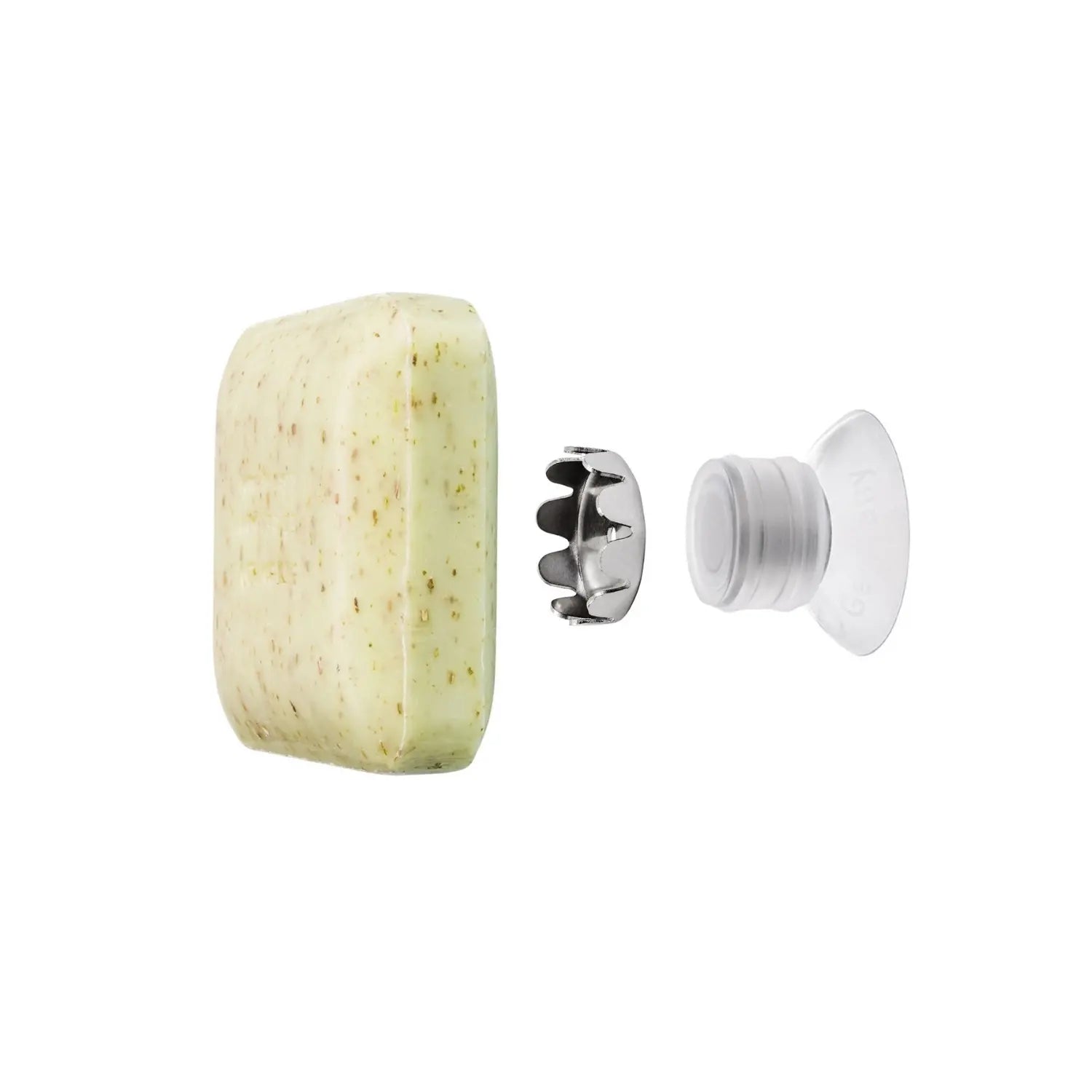
Carefully remove the Protector, or take the magnet out of the VARIO. The magnet must not be placed in water.

02
Reactivate with hot water
Place the suction cup in hot water at around 60–70 °C for 1–2 minutes. You may see it gradually regain its original shape.

03
Dry and cool
Take the suction cup out of the water, dry it well, and let it cool completely to room temperature.


04
Reattach
Once fully cooled, place the suction cup back on a clean, smooth, and dry surface.
Model notes
Before you place it in hot water
The reactivation method is simple, but the magnet should be handled differently depending on the SAVONT model.
Protector & Jumbo
Keep the magnet out of the water
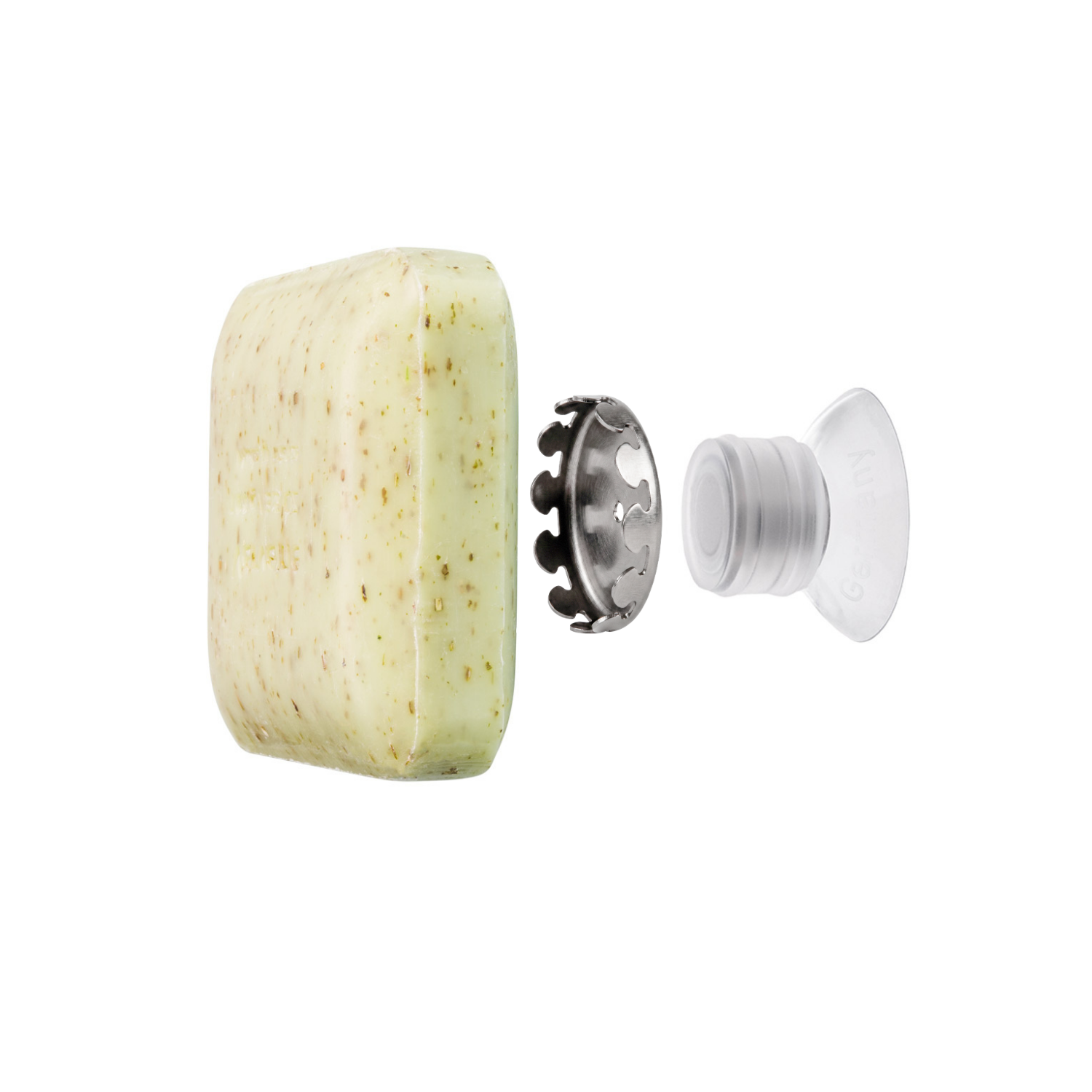
Protector and Jumbo models include a fixed magnetic core. This part should not be submerged in water.
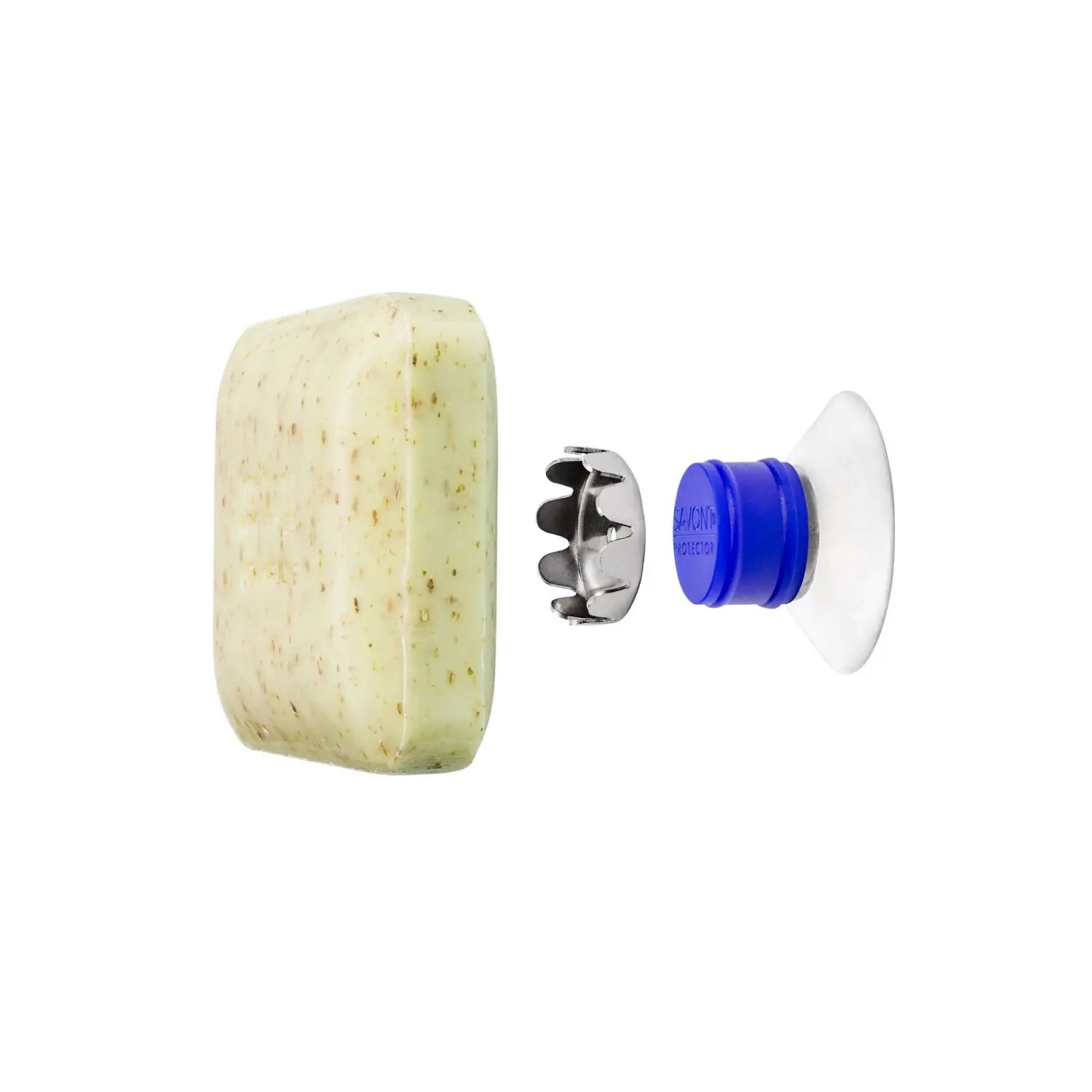
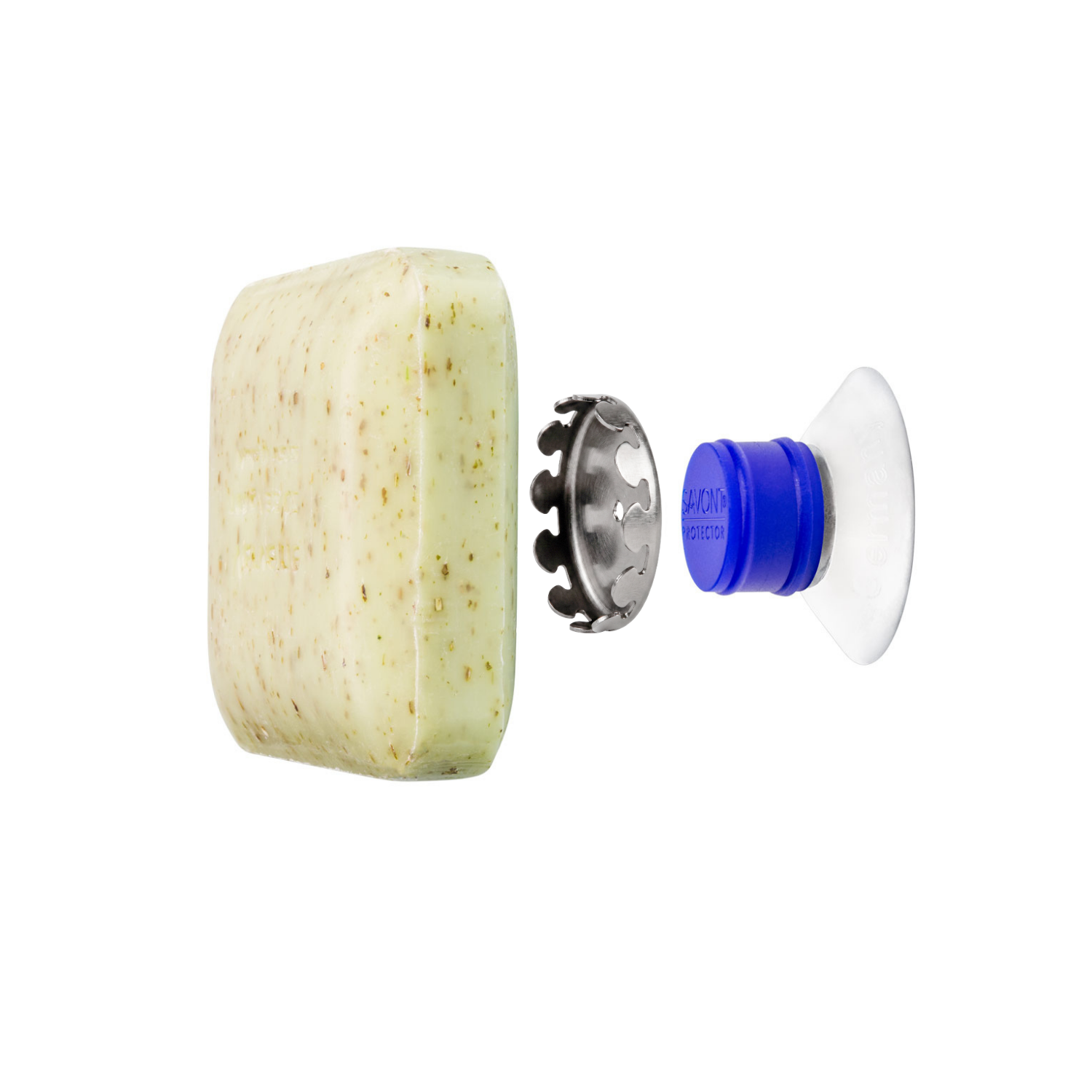
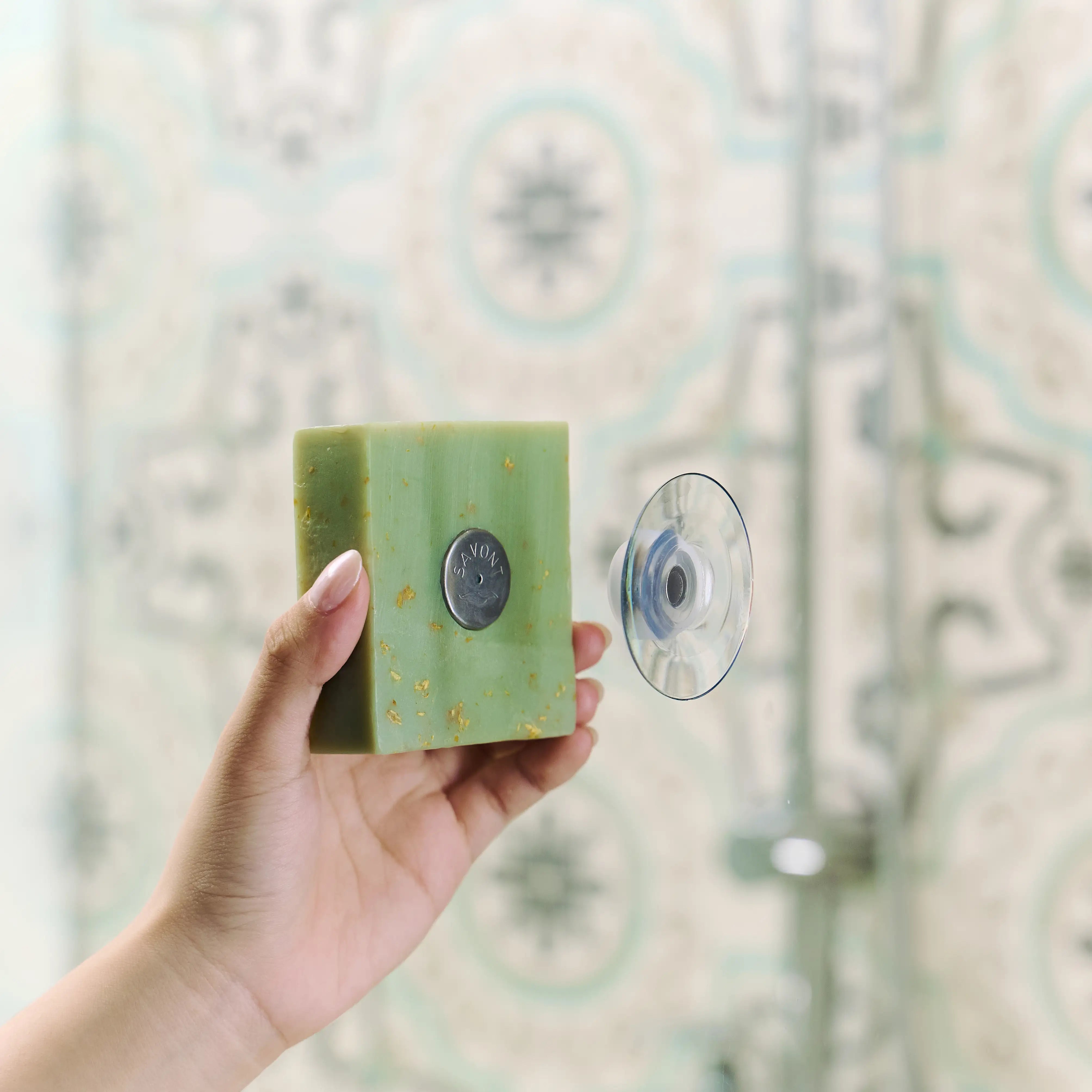
For reactivation, only place the rubber suction part in the hot water. With the Protector Edition, you can use a small magnetic item, such as the soap disc, to hold the suction cup more comfortably.
VARIO Edition
Remove the magnet first
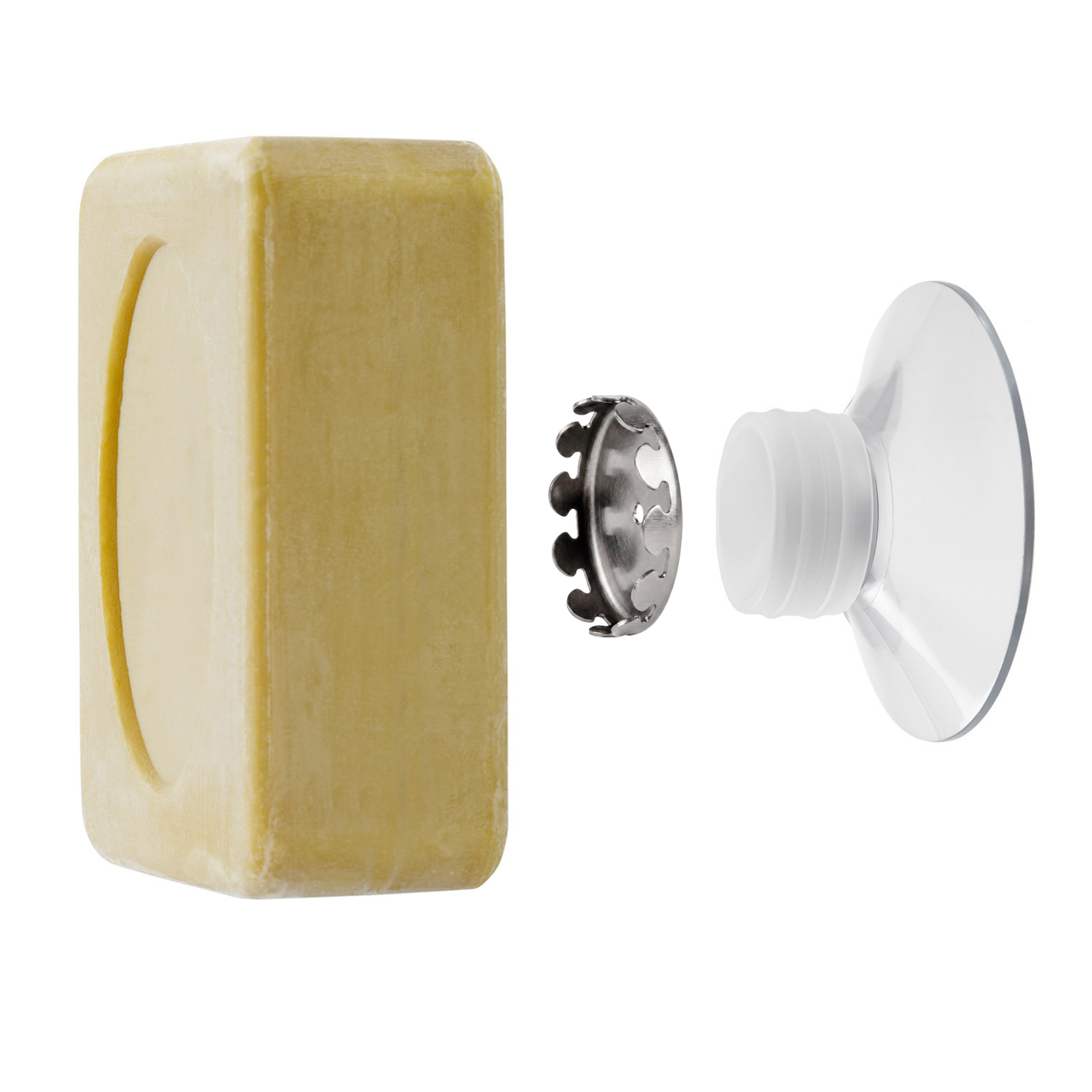
The VARIO has a removable magnet, which makes reactivation especially easy.
Take the magnet out completely, place the suction cup without the magnet into the hot water, let it cool, then insert the magnet again.
The principle
How does a suction cup actually hold?
A suction cup does not stick by itself. It is pressed against the wall by the surrounding air.
When you press the suction cup onto a smooth surface, most of the air underneath escapes. This creates lower pressure inside the cup, while normal air pressure remains outside.
The holding force therefore comes from the pressure difference. If air slowly enters again through tiny channels in the surface or under the rim, the pressure equalizes and the suction cup falls off.
Simple physics

- F
- holding force
- p
- external pressure, such as air pressure
- A
- contact area of the suction cup
More contact area means more surface for air pressure to act on. This is why larger suction cups can hold better, especially on difficult surfaces.
Suction cup size
Why size matters
The diameter of a suction cup changes how much surface area is available for air pressure to act on. In practice, more contact area often means a more stable hold.
More surface = more holding force
A larger suction cup gives the surrounding air more area to press against. That can create a stronger hold without glue or screws.
More surface = fewer leak points
On slightly textured surfaces, a larger suction cup can cover more tiny irregularities and reduce the chance of air entering underneath.
On very porous or heavily structured surfaces, even a larger suction cup cannot guarantee a secure hold. The surface still needs to be airtight enough for a stable vacuum.
SAVONT technology
What really makes a suction cup strong
A suction cup only holds reliably when material, shape, surface finish and sealing precision work together. Small technical details decide whether the vacuum remains stable over time.
Rebound force and elasticity
The suction cup must deform when pressed, but then return toward its original shape. This restoring force helps maintain pressure against the surface.
Precision sealing edge
The rim of the suction cup is where the vacuum is sealed. A clean, even edge helps prevent air from entering underneath.
Contact surface microstructure
The material must adapt to tiny irregularities in the surface. Better contact means fewer air channels and a more stable vacuum.
High-gloss mold finish
The polish level of the injection mold influences how smooth the suction surface becomes. A smoother surface supports a tighter seal.
Geometry and wall thickness
Shape and wall thickness affect how the suction cup bends, seals and carries weight. Each SAVONT model is designed for a specific use case.
Material hardness and flexibility
The material must be soft enough to adapt to the surface, but elastic enough to hold its shape and keep the vacuum stable.
SAVONT uses a specially balanced soft PVC designed to remain flexible and shape-stable over long-term use, even with water, soap and temperature changes.
FAQs
Why don’t some surfaces work for suction cups, even though they seem smooth?
Suction cups work by creating a vacuum seal. Matte, textured, or micro-porous surfaces – even if they appear smooth at first glance – often have microscopic irregularities that prevent a stable vacuum from forming. As a result, the suction cup can’t maintain a firm hold over time.
Does frequent removal and reattachment affect a suction cup’s lifespan?
Yes, frequent handling of the suction cup can lead to micro-scratches on its surface and the accumulation of dirt and oils from your hands. This gradually reduces its ability to create a vacuum, shortening both its lifespan and grip strength. We’ve also observed that people often try to reattach a suction cup quickly – with wet hands or without properly preparing the surface, such as leaving behind lime scale. In these cases, the suction cup won’t hold properly, which can mistakenly be seen as a material defect.
Why did suction cups used to fail so often?
In the past, many suction cups were made from hard, less flexible plastic. They couldn’t adapt to uneven surfaces and quickly lost their elasticity. On top of that, many users didn’t realize that matte or slightly textured tiles don’t allow a true vacuum to form – the suction cup only appeared to be holding.
How does the material affect a suction cup’s holding power?
Whether a suction cup holds well depends on several factors: The material blend is crucial – especially the controlled Shore hardness and rebound behavior. But the wall surface, the polish level of the mold, and even shape stability under daily use also play a role. At SAVONT, we focus on the full package: a specially developed soft PVC that stays elastic, adapts well – and still maintains its shape over time.
How can you check if a surface is suitable before attaching the SAVONT holder?
The easiest way is to press a different suction cup onto the chosen surface. If it holds securely over time, chances are high that the SAVONT holder will also stick well there. This is a simple method to avoid any disappointment.
What surfaces are ideal for suction cups – and why?
Ideal surfaces are smooth, clean, dry, and non-porous – such as glass, glossy tiles, enamel, acrylic, or smooth plastic surfaces. On these materials, the suction cup can form an airtight seal, allowing it to maintain strong vacuum pressure and ensure reliable adhesion.
Product guide
Choose by suction cup size
Different SAVONT holders use different suction cup sizes. The right choice depends on the soap weight, the surface and the level of stability you want.
30 mm
Compact holders for smooth surfaces
30 mm suction cups are used for compact SAVONT holders such as Protector SMART and Protector Edition. They are discreet and suitable for smooth bathroom surfaces.
View 30 mm holders40 mm
More contact area and control
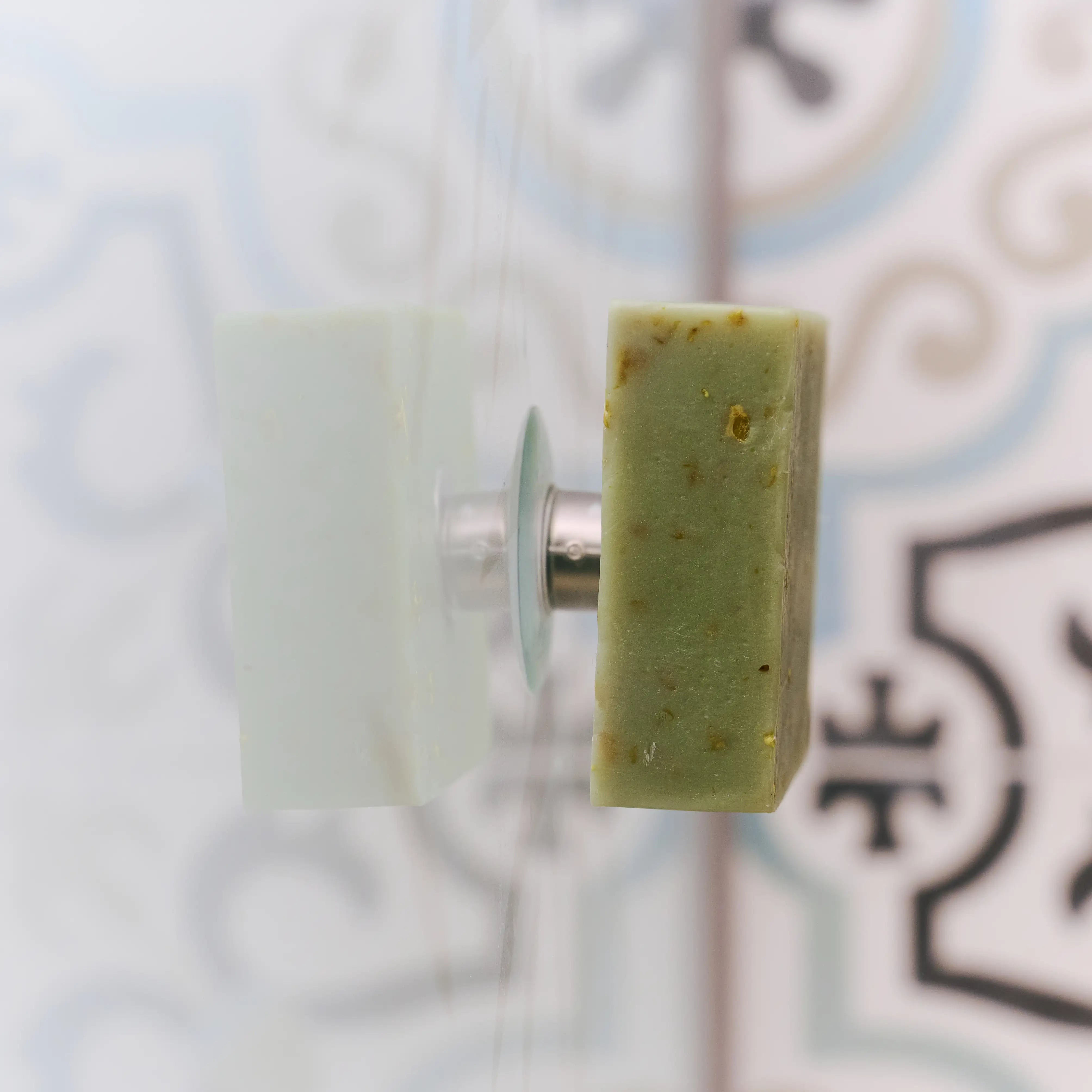
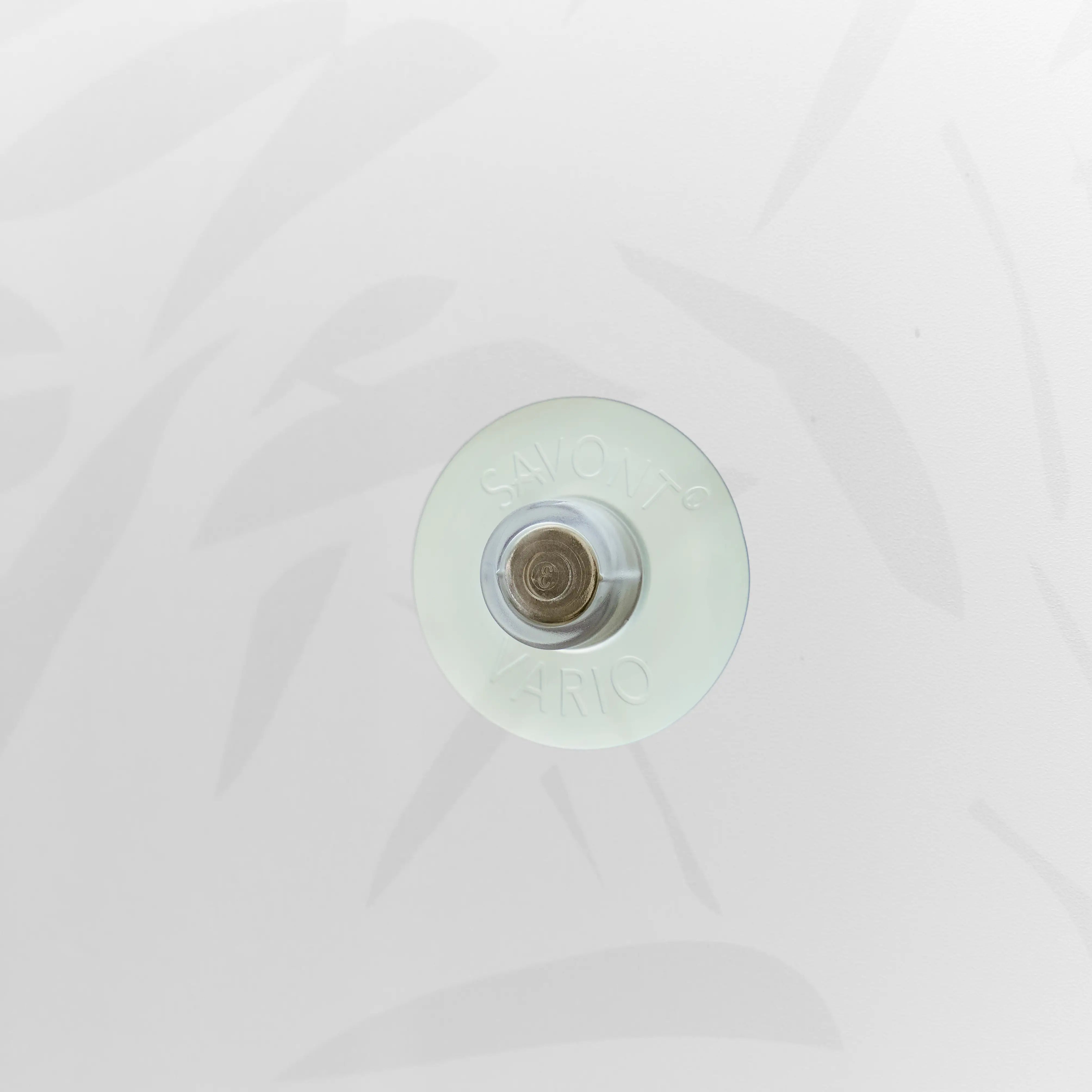
The 40 mm suction cup is used for VARIO. It offers more surface contact and a more controlled handling experience for standard soap bars.
View VARIO50 mm
For larger soaps and demanding surfaces
The 50 mm suction cup is used for Jumbo. It gives the largest contact area and is designed for bigger soaps or surfaces where more stability is useful.
View JumboRecommended SAVONT holders
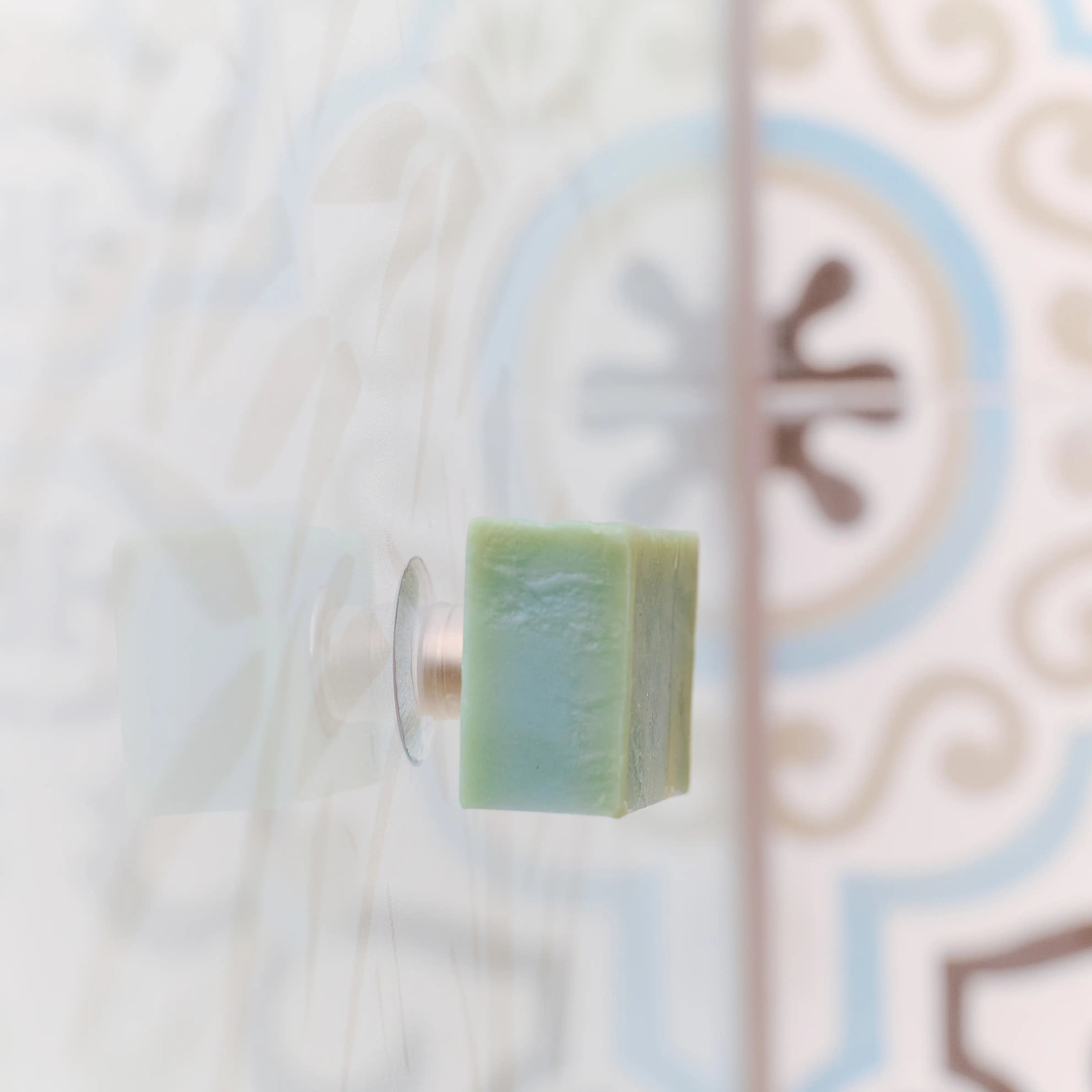
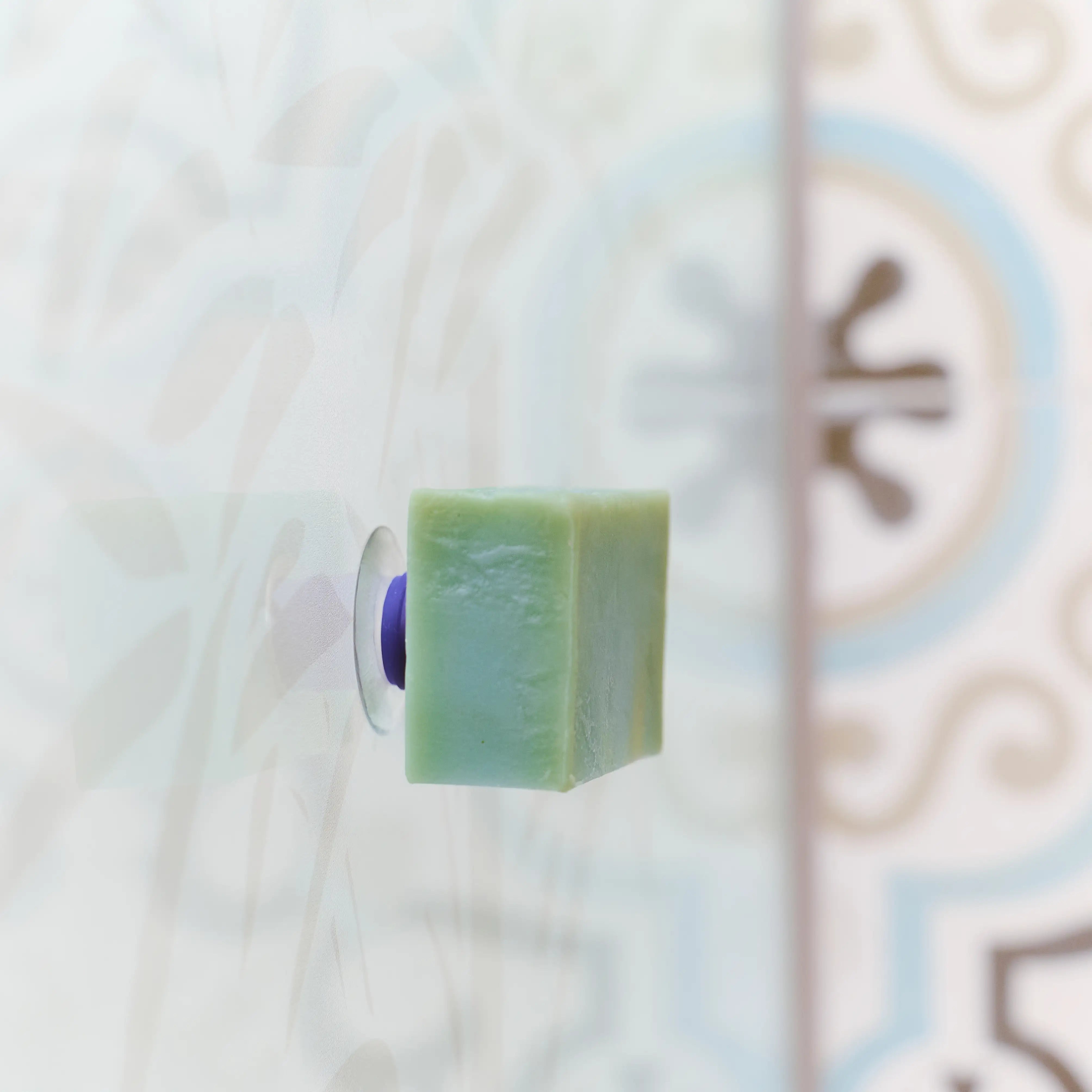
From compact 30 mm holders to the larger VARIO and Jumbo models.
80g

19mm

30mm
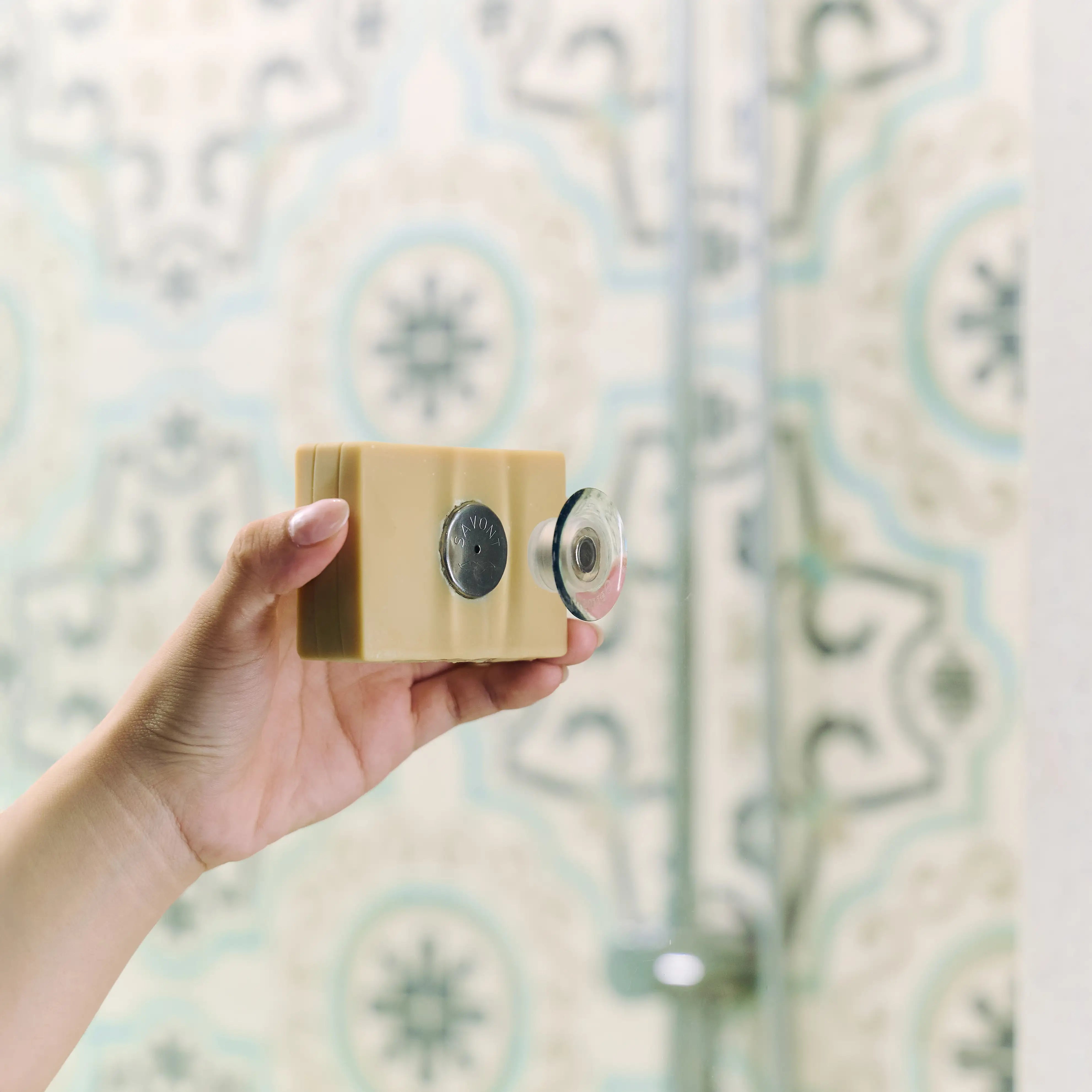
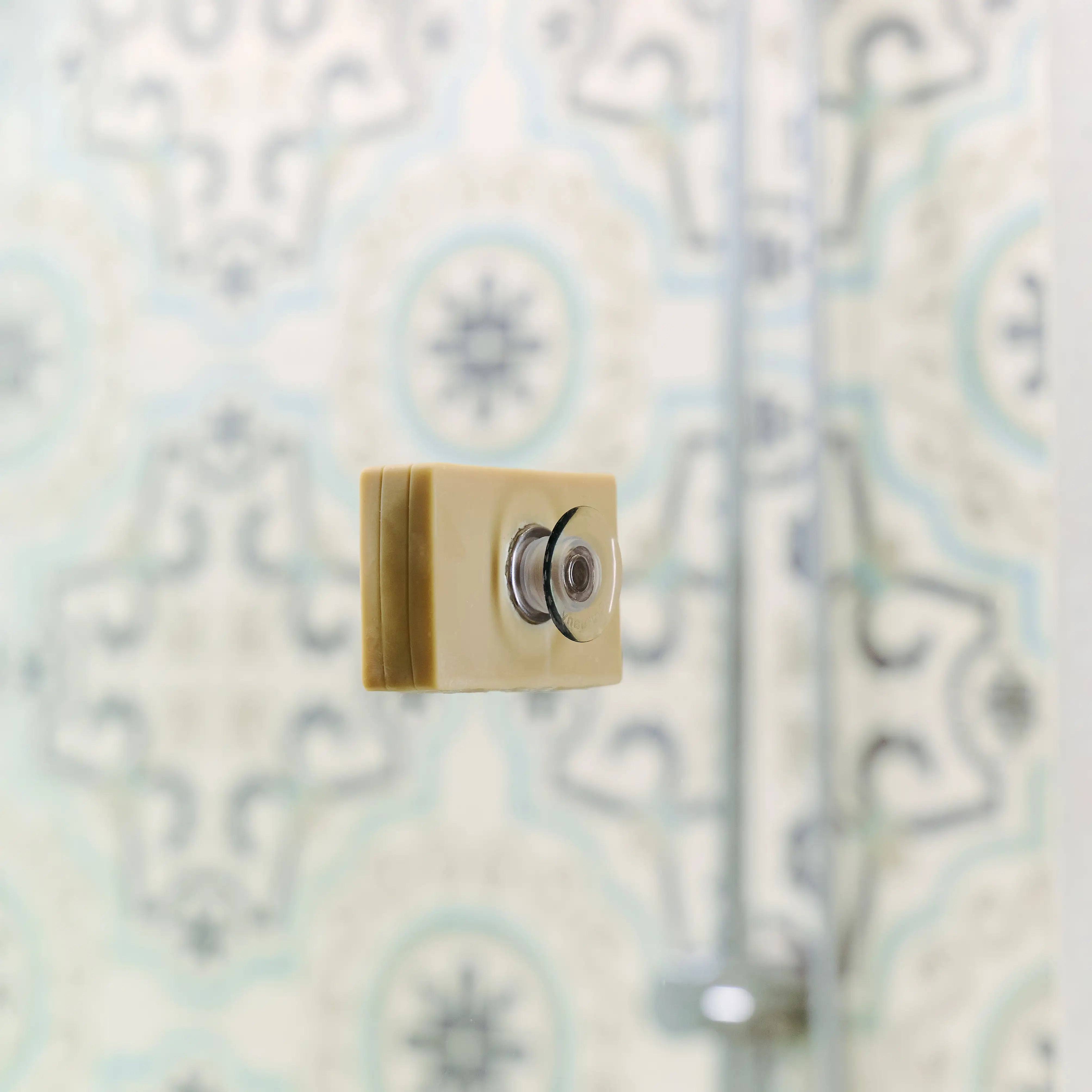
Protector Edition Seifenhalter
125g
24mm
30mm
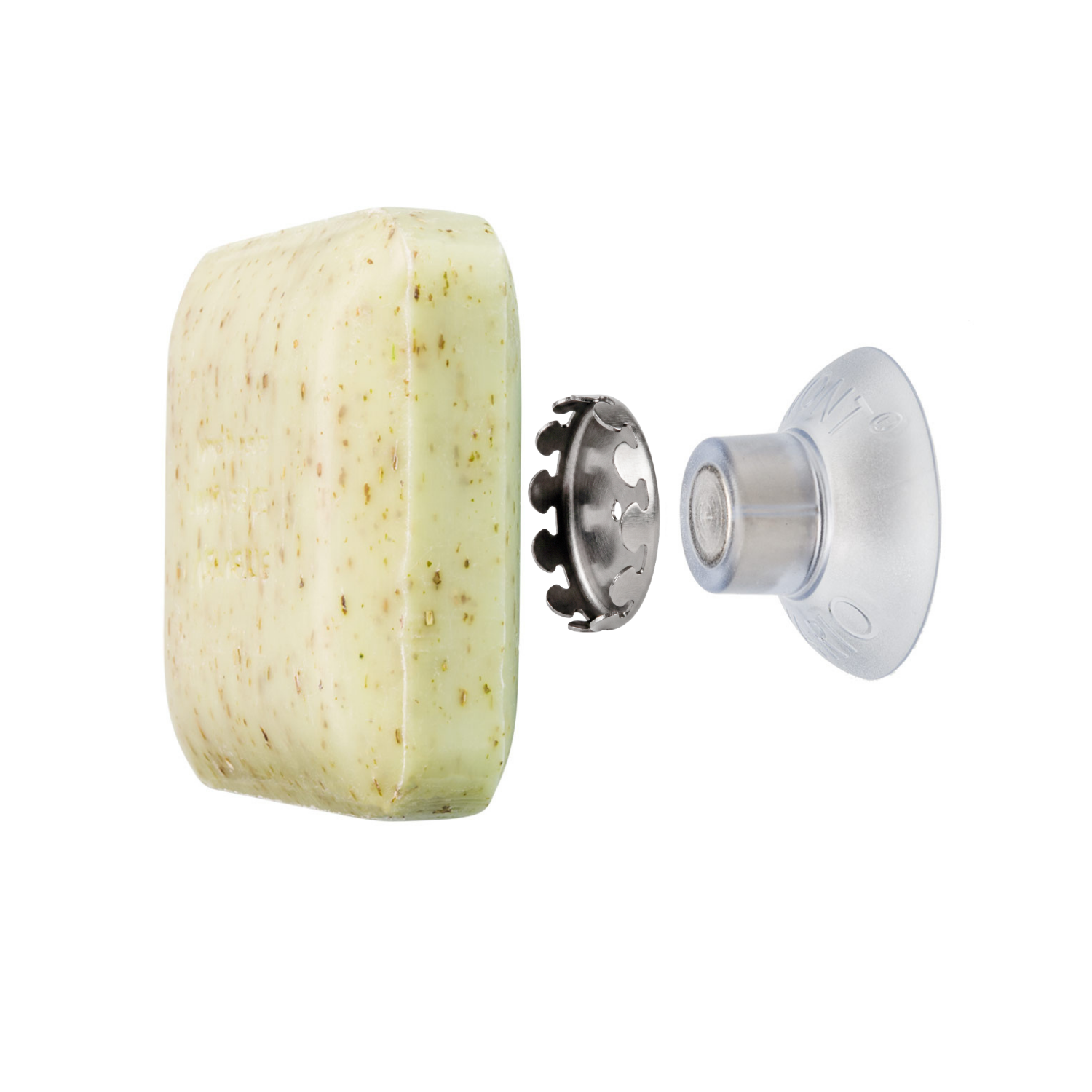
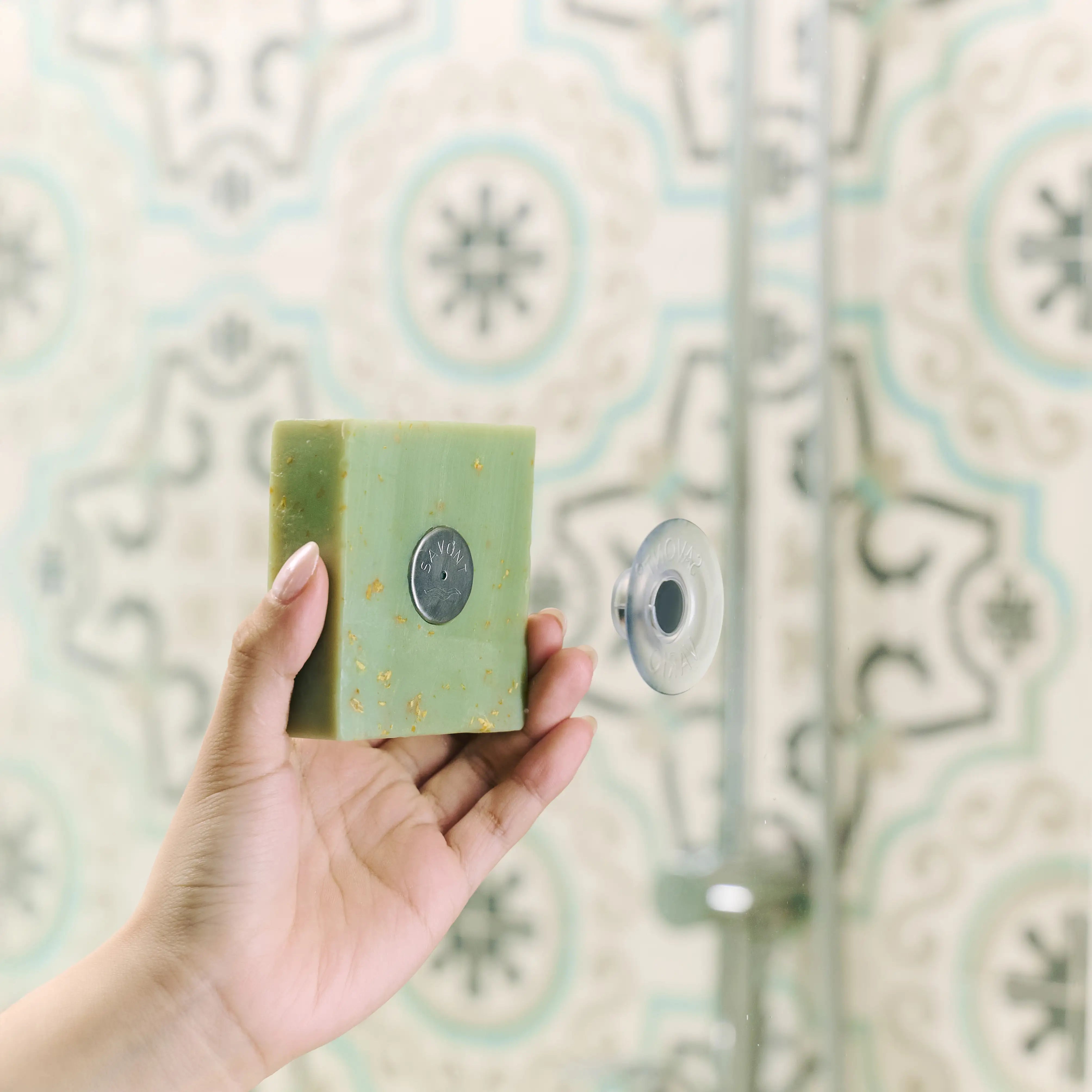
150g
24mm
40mm
180g
24mm
50mm